
Vidalia Mills -
And Was It The Last Hope for American Selvedge Denim?
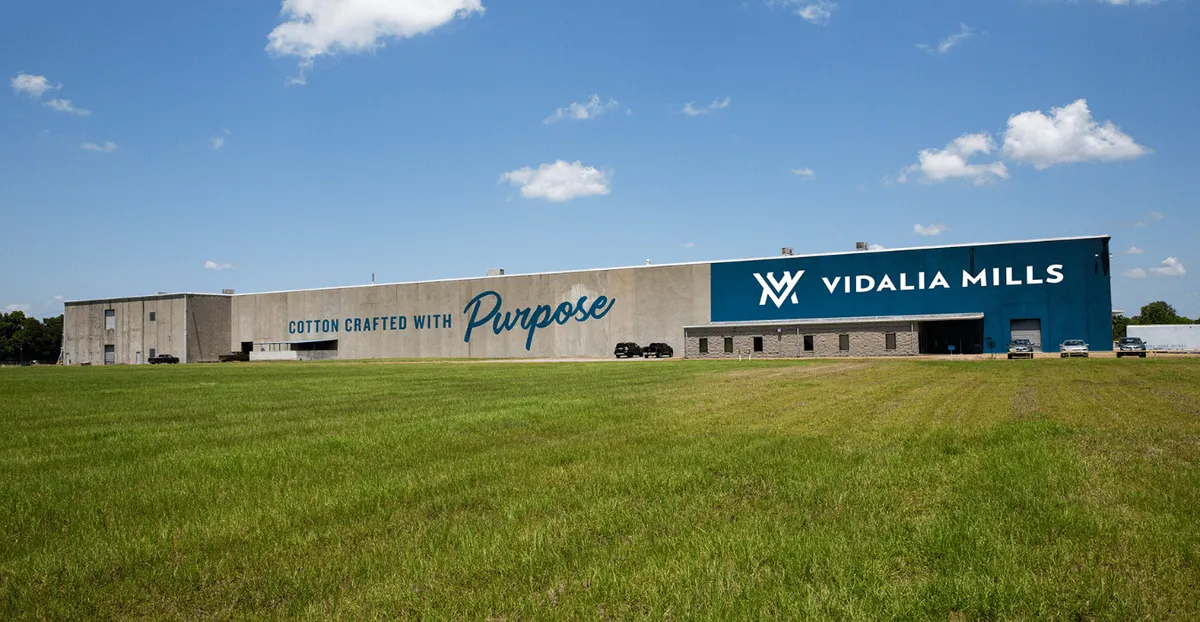
In September of 2019 textile industry veteran and former Cotton Board member Dan Feibus opened the gates of Vidalia Mills, Louisiana and selvedge denim manufacturing on a large scale started again in America.
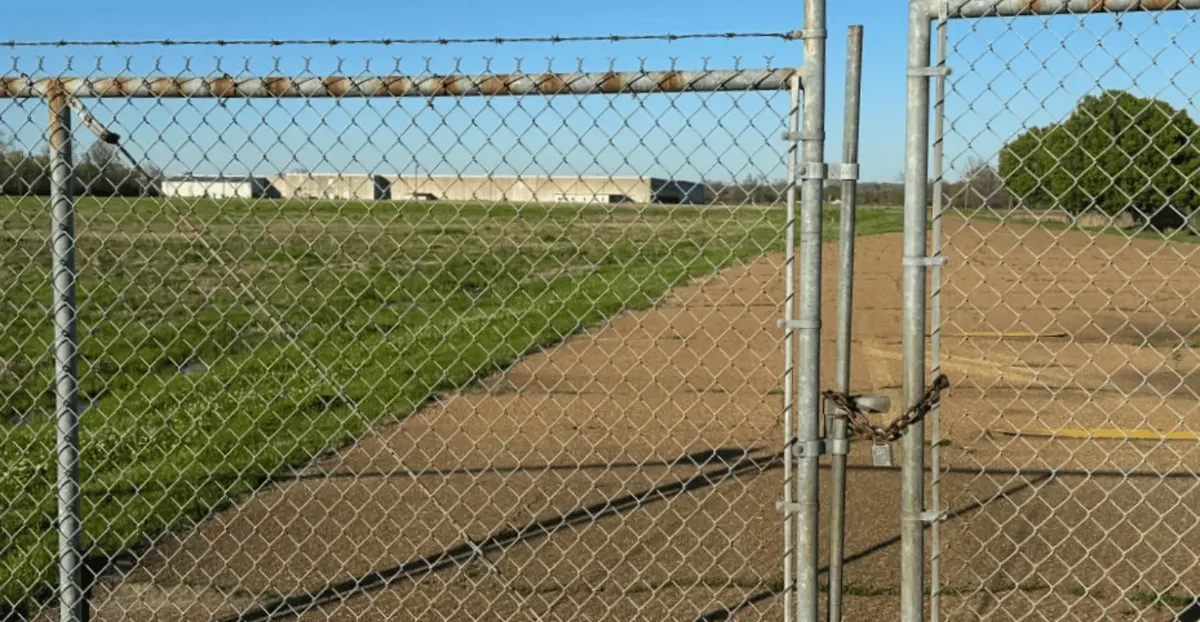
Five years later in November 2024 with 32.5+ million dollars of debt, the same gates closed. For Good.
So what went wrong? And is it's ultimate failure a lesson to anyone considering the resurrection of selvedge denim production in mainland United States.
“Denim is the American fabric, so it’s time we made selvedge denim in the United States.”
- Dan Feibus, 2019
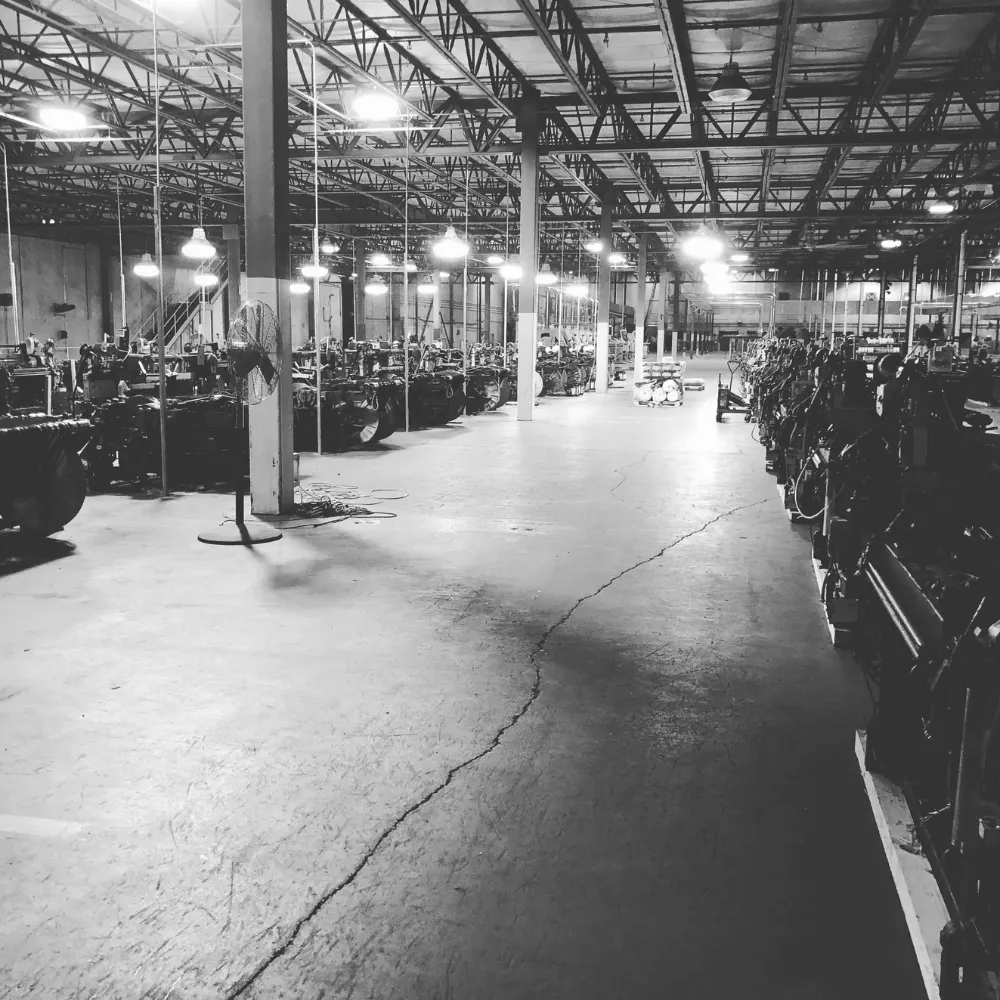
Vidalia Mills. Selvedge denim manufacturing
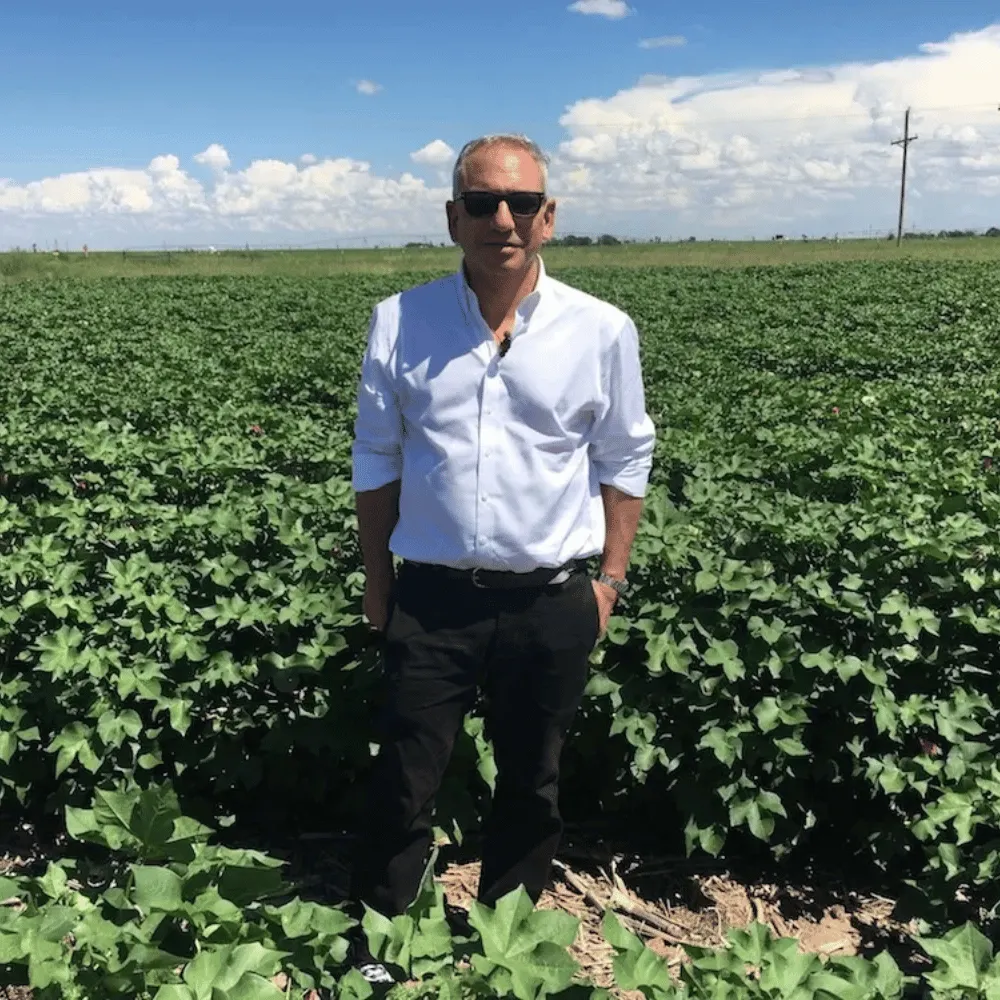
Dan Feibus. CEO of Vidalia Mills Co
Vertically Integrated
Home to the annual Jim Bowie Festival, the city of Vidalia sits on the west bank of the Mississippi River just opposite its neighbouring city of Natchez. Although Vidalia doesn't have a deep rooted history in the textile industry, it does lay in America's cotton belt giving the city a logistical advantage.
Dan Feibus saw the benefit of the location and lower procurement costs - the mills raw cotton would arrive from farms less than 100 miles away thus supporting the "Farm to Yarn" model Feibus was aiming to achieve.
As a vertically integrated mill Vidalia would handle the entire process of denim production, managing the yarn preparation such as carding, drawing and spinning all the way though to weaving, dyeing and the finishing of the final fabric.
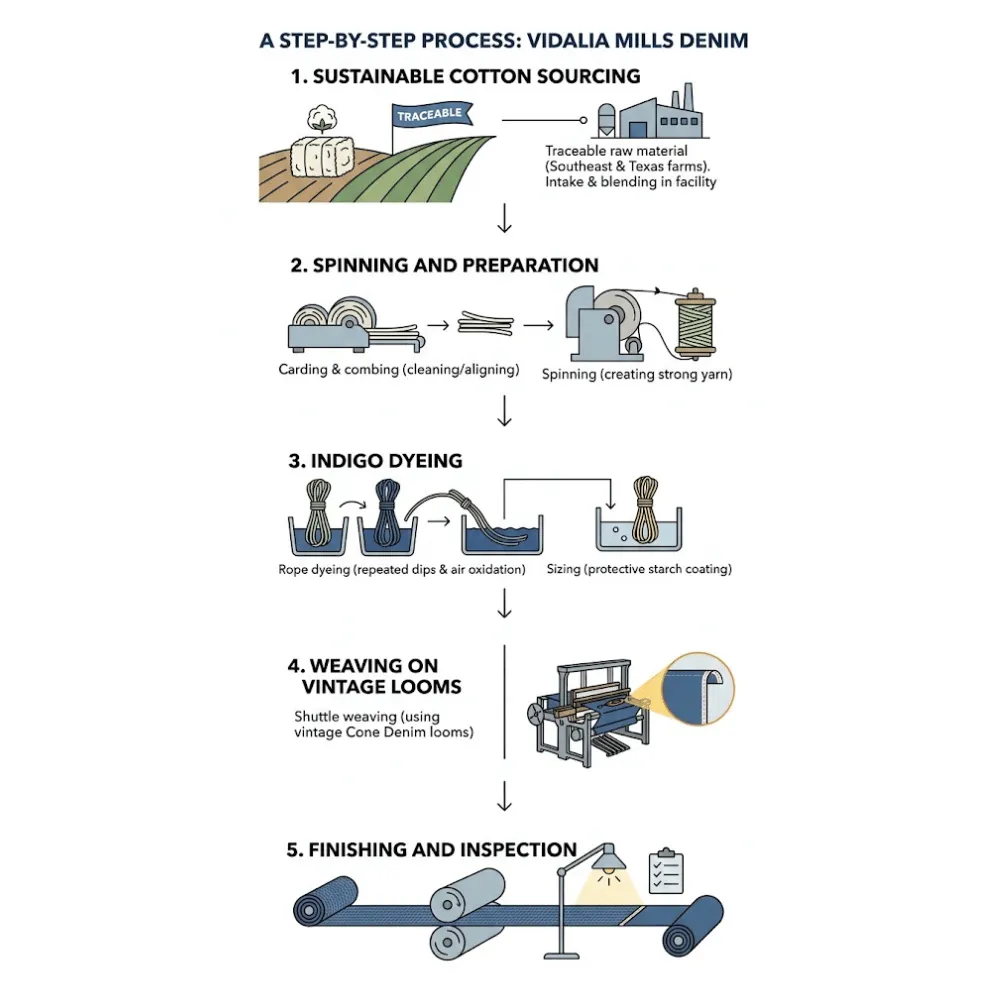
A visual representation of a vertically integrated cotton mill
Vidalia Mills Co would be housed inside a 900,000 square foot, refurbished former Fruit of the Loom building at the city's Apparel Distribution Center
46 vintage Draper X3 shuttle looms were purchased from the once famous, now closed Cone Mills at White Oak Mill in Greensboro, North Carolina. The looms came with all the tools and spare parts to service them, they even came with the wooden floor they were originally bolted to!
The looms would use BASF e3-certified sustainable cotton, every bail of which could be traced back to the individual farm and show every aspect of it's origin, from planting all the way to harvest providing full transparency of the cotton's "farm-to-yarn" journey
There are inherent problems that come with a vertically integrated model however;
For example -
Investment costs to acquire machinery and equipment and the expense of maintaining and servicing it.
As companies strive to supply an economy of scale, the ability to increase or decrease the production of raw materials may be lost.
Production capacity is somewhat fixed, and large surge in orders can pose output issues.
What Feibus was trying to achieve by having the whole denim process under one roof was an ambitious undertaking. Even more so when you consider that White Oak Mill had closed down only two years earlier, after over 100 years of denim production, as a result of these same mounting problems.
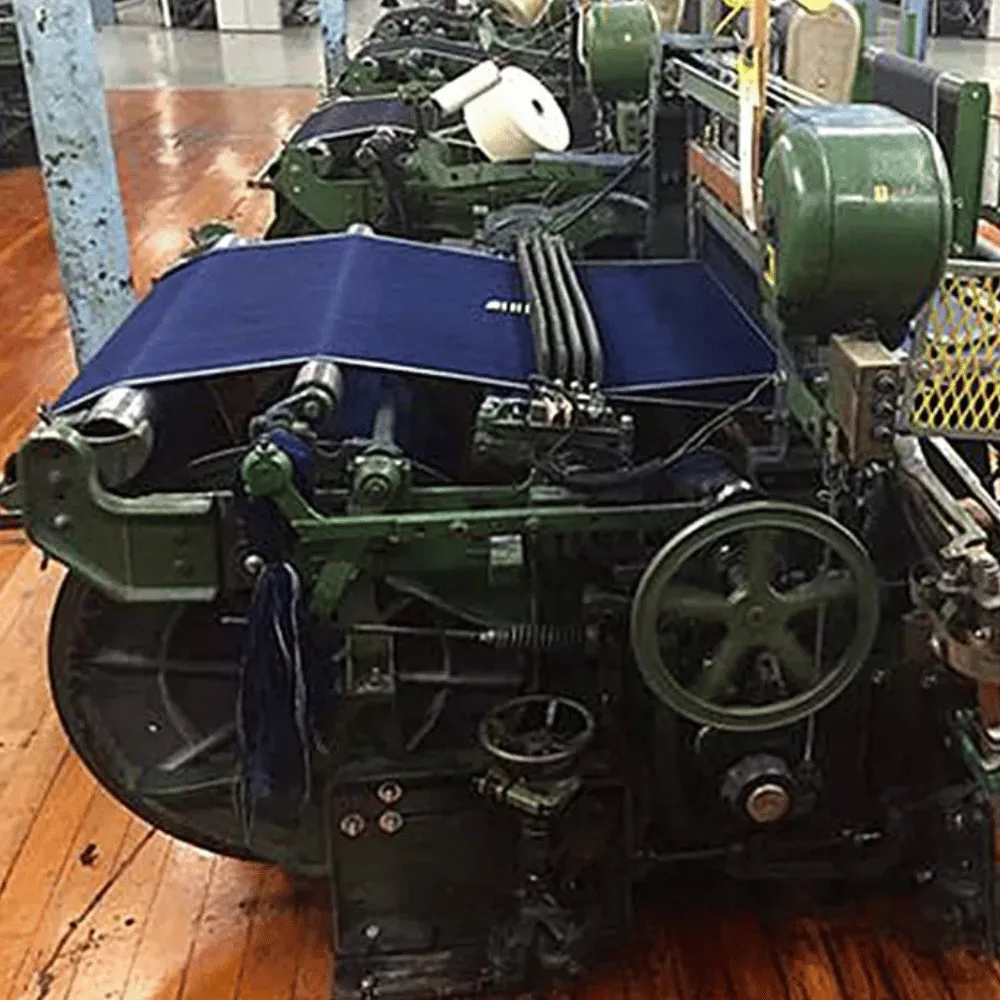
A Draper X3 cotton loom at White Oak Mill in Greensboro, NC
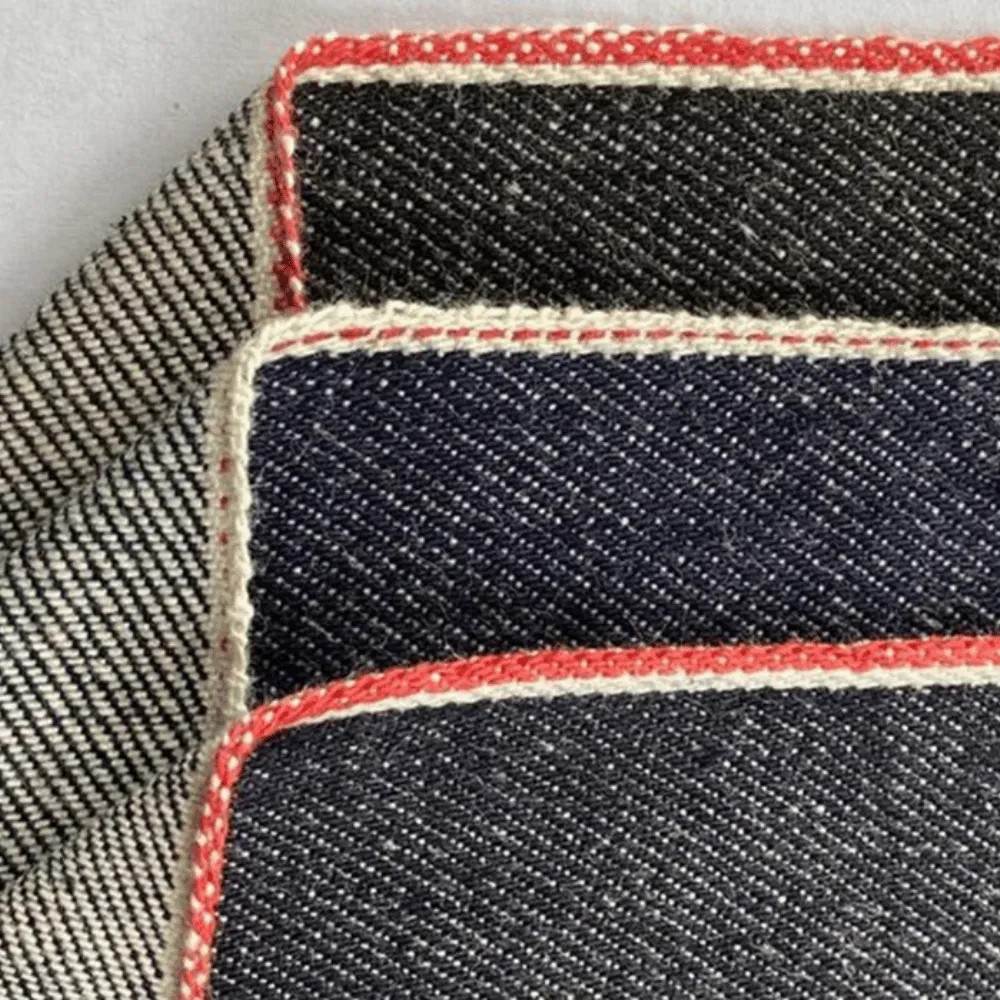
Examples of some of the Selvedge Denim produced by Vidalia Mills
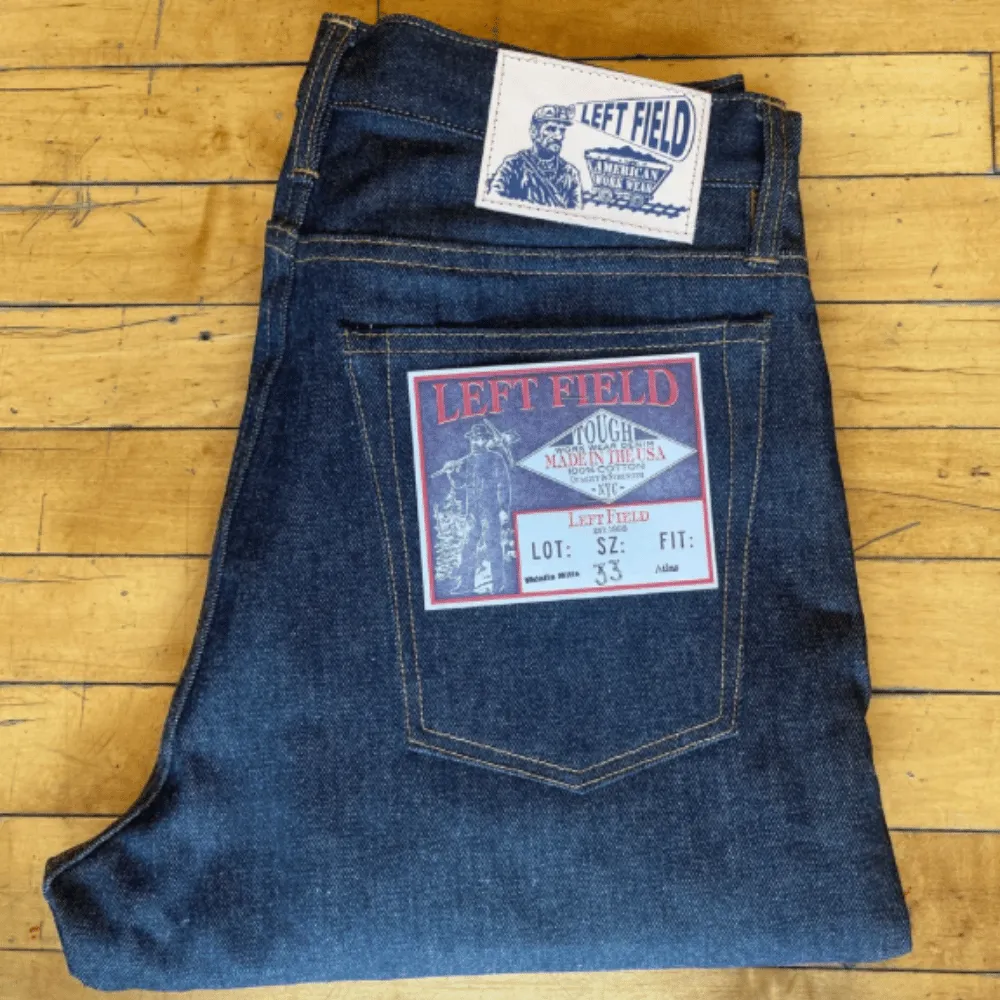
Left Field NYC, one of the premium Jeans brands that were a customer of Vidalia Mills Co
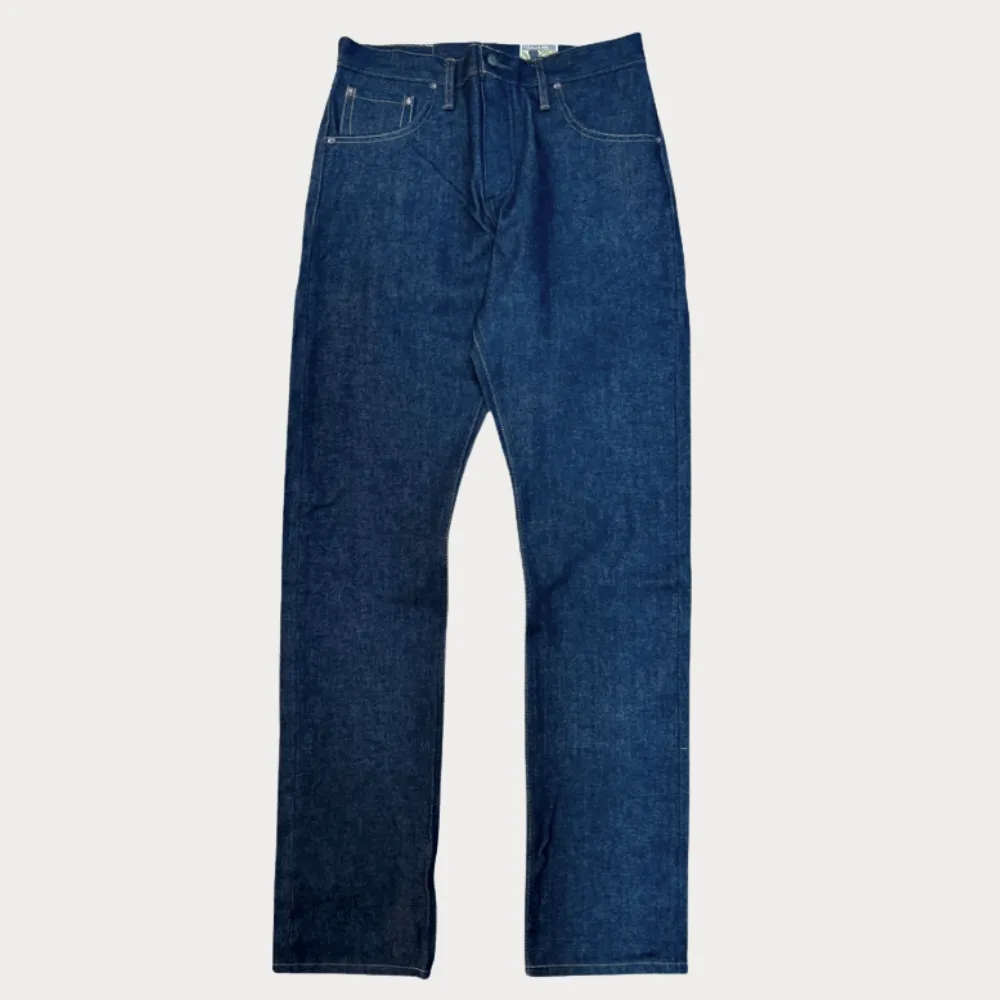
Atlas Vidalia Mills 14 oz Indigo Raw Denim - £214 ($283 approx).
The mill was to ultimately supply American brands such as Imogene & Willie, Raleigh Denim and Left Field NYC with top quality selvedge denim products.
A Narrative Investment
Sustainability and historical value were the main philosophies of Vidalia. They were to target jeans companies with denim enthusiastic customers that bought their clothes with a moral consideration. The clothing had to be made to last and have environmental thoughtfulness that would justify the higher retail price. The customers would also invest in the narrative that they were buying a piece of clothing with an historical value. (After all the denim they were buying was produced on antique shuttle looms, the same looms that had produced denim for Levi's Strauss & Co since 1940)
In today's textile industry full transparency of environmental impact is vital, some of Vidalia Mills sustainability model would include:
70% of the production plants energy would come from hydroelectric power and a large solar power system that was to be installed on the roof of the building.
Cotton would be planted on the 150 acre property in front of the mill which would shorten the supply chain of some of the fabrics.
Production laundry would have zero discharge and every development wash that was done would be given an Environmental Impact score so that customers knew exactly what impact the wash is having on the environment before they purchased the fabrics.
The company's carbon footprint would always be less than the industry average because the whole production chain came under one roof.
Production
Initial claims by Vidalia Mills were that it would produce between 11 and 15 million yards of denim per year. This estimate was later scaled down to between 7 and 9 million. Selvedge denim is traditionally slower to produce because it relies on a shuttle that carries a continuous yarn back and forth across the fabric creating a "self-edge" (selvedge) preventing fraying. It takes approximately 2 hours to weave enough fabric for a single pair of jeans.
It's also believed that the mill never reached full production capacity because there was a lack of locally skilled machinery technicians that could operate the labour intensive antique Draper X3 looms.
Using these vintage machines without the proper labor meant fabric irregularities, production delays and less quality assurance. This created fulfilment issues for downstream clothing brands. Domestic customers also faced rising cut-and-sew prices and volatile tariffs on necessary imported trims.
Raw material costs also had an impact on production as the mill was strictly committed to using 100% e3 certified sustainable and non-GMO Pima cotton, sourcing these specialised premium fibres created exceptionally high input costs and time constraints.
Together with the initial debt of $32.5 million and the strain of low product margins. Supply times became unreliable and labour costs grew, all of which marked the beginning of the end for Vidalia Mills.
In September of 2024 Left Field NYC finally gave up on Vidalia, the Mills announced a rebrand and attempted to raise another $7 million to "overcome funding delays and scale operations". The following month it reportedly payed off 30% of it's workforce, a month later it shut down operations and locked its gates.
Some estimate the final debt Dan Feibus finally owed was in the region of $70 million.
In 2025 industry-wide data indicated that premium heritage and selvedge denim items accounted for approximately 10% or less of overall global and regional denim production and sales. The vast majority of U.S denim sales continue to be driven by mass-market, mid-priced and stretch-fit denim rather than specialised rigid selvedge.
The simple answer to the failure of Vidalia Mills and White Oak Mill is that irrespective of transparent environmental reports and sustainability policies, the majority of people buying denim don't want to pay $200+ dollars on jeans that may take months to wear in and are stiff and heavy and comparatively uncomfortable to wear versus [cheap] light-weight, stretch denim.
Big in Japan
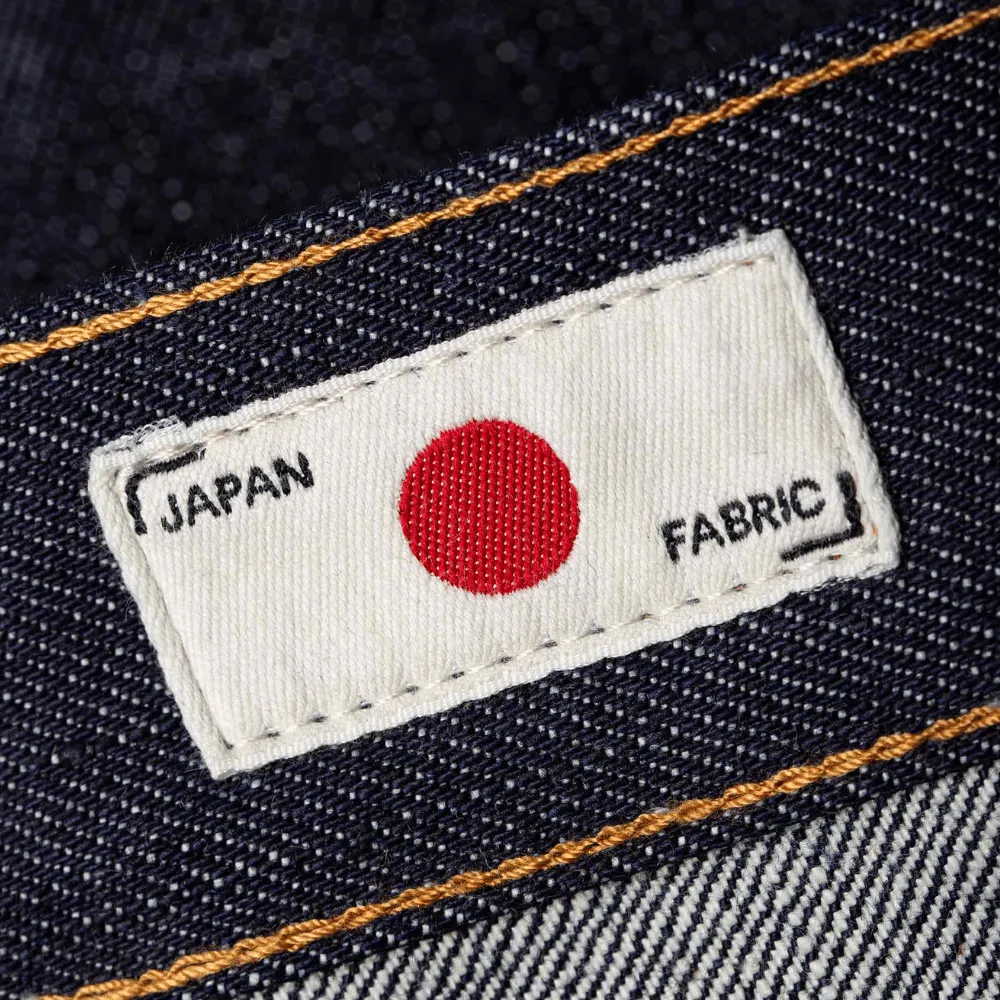
With a large majority of its cotton imports coming from America, 90% of today's premium selvedge denim is woven in Japan.
Traditional narrow shuttle looms such as Draper and Toyoda models are rare globally but Japan maintains and operates an estimated 80% to 90% of the world's working vintage shuttle looms. Production is heavily concentrated in specific regions, primarily the Kojima district in Okayama Prefecture and Osaka.
You can read more about Japanese Selvedge Denim here
Obsessive Craftsmanship and "Kaizen"
Japanese culture deeply values the philosophy of Monozukuri - the art and pride of making things with deep care and responsibility.
"Shokunin Kishitsu" is essentially the "craftsman's spirit", where a lifetime is spent mastering details of a trade.
Japan started producing it's own selvedge denim called KD-8 (Kurabo Denim-8) in 1972 before that it relied on importing American fabrics from Cone Mills, for example.
Since then, guided by "kaizen" or "continuous improvement" Japan has spent decades refining dyeing, spinning and weaving. Unlike modern industrial looms that prioitize flawless uniformity, vintage looms are calibrated to create character, texture and stubby or grainy feels to it's fabrics.
Japanese artisans use authentic rope-dyeing techniques with pure indigo so the core of the yarn stays white, leading to high-contrast, personalised fading over years of wear.
This attention to craftsmanship the production of unique weaves has made Japanese Selvedge some of the world's most expensive fabric.
With only around 1000 specialised mills remaining in Japan, production is slow and limited, creating long waiting lists and a fiercely global market that drives up value and prestige.

I have no affiliation, commercial or otherwise to any of the brands or companies mentioned on this site.
All content is original. If I have referenced any existing article or website, a link to the source or website has been included.
If you are the rightful owner of any material featured here and would like it removed, please contact me at: